 MENU
MENUFEATURES
An Evening with Helen Bain and The Daffodil Days
April 18, 2026 | Blog > Features > An Evening with Helen Bain and The Daffodil Days
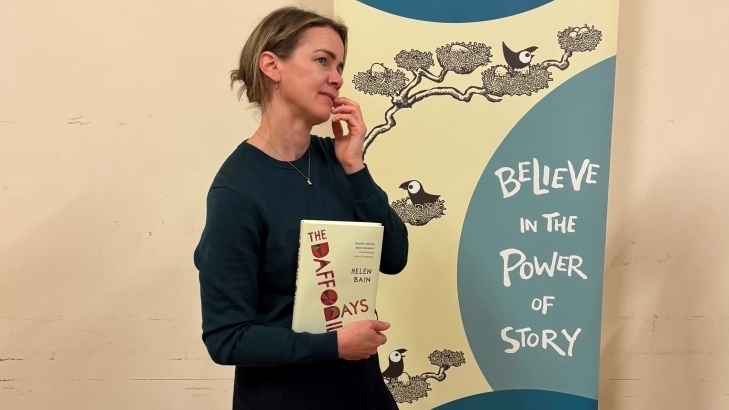
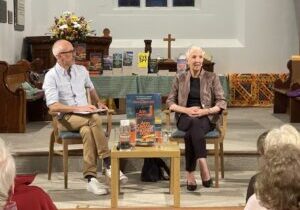
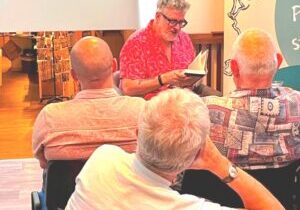
It was another one of those evenings that reminds us why we love what we do. Dominic opened the event by welcoming everyone, thanking our wonderful customers for their support, and offering an especially warm hello to those joining a Bookery author event for the first time. So many people booked tickets that we had to make a late shift to the Boniface Centre — a very happy problem to have — and the atmosphere as everyone settled in felt full of anticipation and genuine excitement.
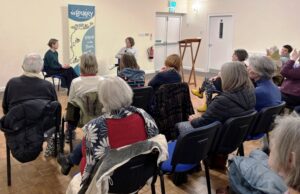 After a quick look ahead to our next events, Dominic introduced our author for the evening Helen Bain and thanked Carl, our shop manager, for stepping up to chair the conversation. Helen told us, with a hint of trepidation, that this was her very first bookshop event. Having spent around five years on and off in Devon researching The Daffodil Days — meeting local people, learning bell‑ringing, diving into village stories — she said she was thrilled to be with us. The feeling, as the room made very clear, was entirely mutual.
Helen explained that although the novel focuses on a short period in Sylvia Plath’s tragically brief life, she was determined not to cover old ground or fall into fatalistic retellings. Instead, she wanted to bring something new, something more hopeful, casting light on what people in North Tawton might have seen and heard in 1962, long before Plath became a cultural icon. Carl asked about the novel’s backwards‑moving structure, starting in December 1962 and working in reverse. Helen admitted that reverse chronology can be demanding for the reader, but that she always confident that that she wanted to run the story backwards.
 Carl picked out the kaleidoscope of voices running through the book and asked how Helen had gathered them. She described an extraordinary research journey: reading Plath’s letters, journals and poetry; receiving generous support from the Devon & Exeter Institution, who put out a call for local memories; and being welcomed by the bell ringers at St Peter’s Church. One especially lively strand of her research took her to the Railway Inn, where landlord Bert Bolt became a key storyteller. Helen described him, affectionately and with admiration, as perhaps one of the best landlords in the country, full of folklore, humour and vivid tales — including his story about driving incidents occurring after a policemen’s ball than any other dance!
What surprised her most as she wrote, she said, was realising the book had become a story about Devon itself — a community on the cusp of cultural change. Plath remains at the heart of it, but the shifting world around her became just as important.
 Then came an unforgettable highlight of the evening: Helen was joined on stage by Titch Scott, a North Tawton resident who had helped her navigate the Devon dialect and shared vivid memories of his own childhood in a farming family in 1962. His voice, warm and richly Devonian, brought a new dimension and character to the room. Hearing Helen and Titch read together from the opening of Chapter 9 felt joyous and new — a shared storytelling moment that drew the audience in completely. The applause at the end was long, loud and heartfelt. It’s an idea we’ll certainly think about weaving into future events.
Helen spoke about her decision not to make the book revolve around the Plath–Hughes marriage commenting that Ted Hughes appears mostly around the edges of the book. Two chapters take place in London, following the couple’s BBC recordings — a crucial part of their income at the time — and she said she loved researching and writing about the BBC at the start of the ‘Swinging Sixties’ at a time when many poets were writing slogans for the emerging world of television advertising.
One story that particularly captivated the audience was Plath slicing the top of her thumb while peeling onions and rushing across the road to the local GP to have it sewn back on — the kind of vivid, everyday moment that fed her poetry and found its way into the novel’s texture. Helen described the thousand daffodils growing in their garden and how Plath longed for the shape and safety of family life.
 During the Q&A we learned why there are no daffodils on the book’s cover and why a quilt appears instead — a theme the publisher picked up from the novel. After more thoughtful questions and lively conversation, Dominic thanked Helen for providing such a rich and interesting evening, wished her the very best for her upcoming bookshop and festival events, and closed with thanks to our audience and to Carl for steering the discussion so beautifully.
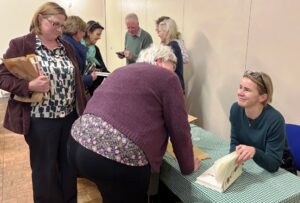
There was a lovely buzz afterwards as readers chatted with Helen and had their books signed. It felt like a night full of connection, local history, literary fascination and genuine warmth.
Signed copies of The Daffodil Days are available in store or online HERE.
April 18, 2026
Blog > Features > An Evening with Helen Bain and The Daffodil Days