 MENU
MENUFEATURES
Coming Home on Love Lane: An Evening with Patrick Gale
April 23, 2026 | Blog > Features > Coming Home on Love Lane: An Evening with Patrick Gale
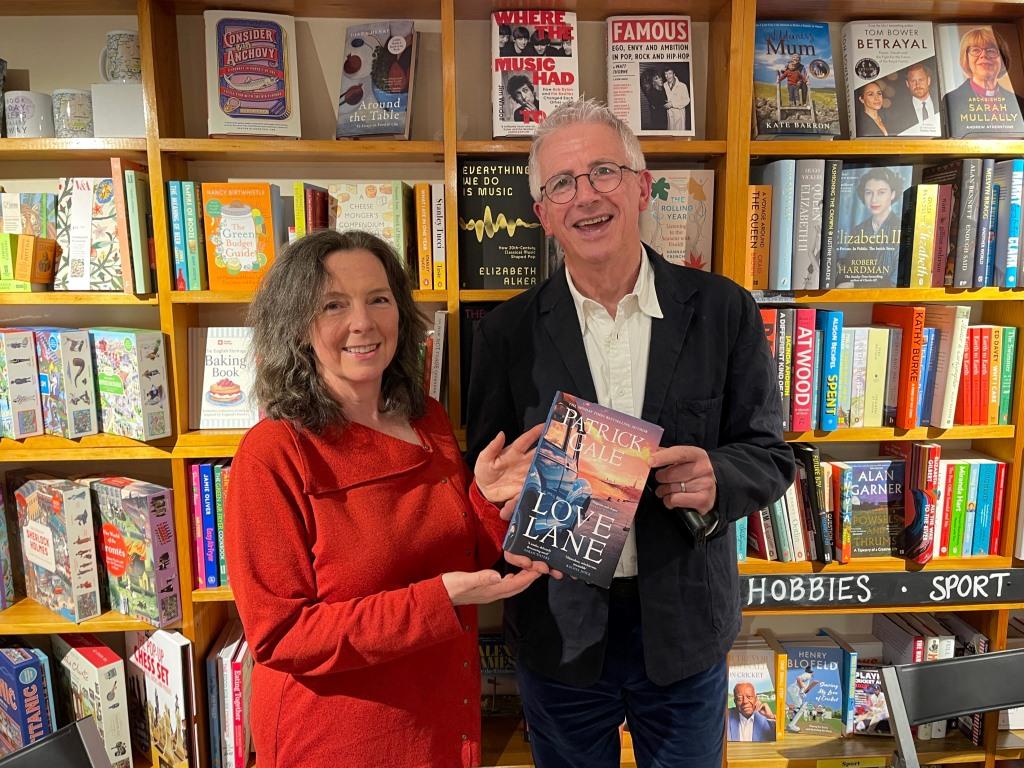
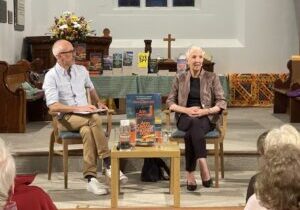
It was another full house at The Bookery, with Dominic delighted to welcome both familiar faces and a wonderful number of first‑time visitors, all keen to hear one of our original Patrons, Patrick Gale, in conversation with our very own Alison Sweatman. Alison’s pleasure at chairing the evening was immediately evident, setting a relaxed and generous tone.
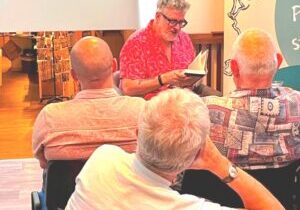
Alison opened by inviting Patrick to talk about the relationship between Love Lane and his previous novel A Place Called Winter, which Patrick described with a smile as having a very Gale‑esque happy ending. He explained how the character of Harry Cane links the two novels and, to draw everyone fully into the world of Love Lane, read from the book’s opening pages. His voice quickly enveloped the room, setting the emotional cadence for the evening.
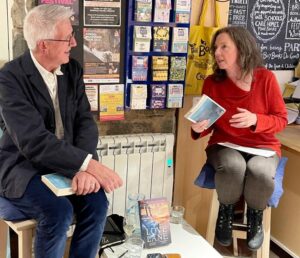 Alison spoke movingly about the sense of loss that comes when finishing a book that has completely captivated you, a feeling she said was especially strong with Love Lane. Patrick reflected that he didn’t think he could have written the novel when he was younger. Writing about his parents and grandparents, he told us, was deeply moving and left him feeling intensely protective of them. He spoke about his grandparents’ unconventional marriage, contrasting it with his parents’ more orthodox relationship, and described how the story is rooted in 1952, shaped by Harry Cane’s return from Canada. Much of the novel, Patrick explained, grew from extensive research, particularly the letters exchanged between his parents and grandparents.
Alison commented on how real and lived‑in the marriages and family relationships feel in the book, with secrets and mischief quietly beneath the surface. We heard about the harshness and isolation of Harry’s life on the Canadian prairies, where neighbours might be sixty miles away and homesteads stretched across vast expanses. Patrick spoke of the devastating droughts of the 1930s, the Depression, and the toll taken by the First World War on Canada’s population, making Harry’s survival all the more striking.
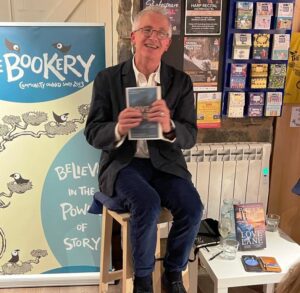 Avoiding spoilers, Alison asked about the pivotal letter that alters Harry’s life. Patrick revealed that although Canada looms large emotionally, much of Love Lane is set in northern England. The title, we learned, comes from the actual Liverpool road where Patrick’s parents lived after they married. He shared stories of the aunts in the novel and how warmly they approved of Harry, who was notably good at talking to women — something far from common at the time. Patrick also encouraged readers to explore the photographs he has gathered on his website, which helped shape the textures and atmosphere of the book.
Throughout the evening, Patrick proved a wonderfully generous and engaging performer, weaving humour and anecdote into his reflections. Alison was a superb chair, clearly relishing the exchange, and her own personal connection added resonance when she shared that her parents had met in Canada.
 There was laughter as Patrick spoke candidly about the intimate lives of his parents, grandparents and aunts, alongside moments of warmth as he described the importance of the letters they preserved, envelopes included, which gave him extraordinary detail to draw upon — including, to the audience’s delight, just how significant sex was in the aunts’ lives. Alison highlighted Patrick’s skill in balancing humour with the bleaker realities of post‑war northern England, prompting Patrick to share that he began as a comic novelist before an editor urged him to let pain into his work. Humour, he said, now helps make difficult subjects more bearable.
Religion, politics and history entered the conversation too, including a brief but sobering discussion of fascism and the presence of the Ku Klux Klan in 1930s Canada. Patrick also spoke about visiting North Battlefield as part of his research, where library records revealed that Harry Cane ultimately died a pauper. A lively Q&A followed, enthusiastically encouraged by Alison’s promise of Love Lane fridge magnets for the first questions.
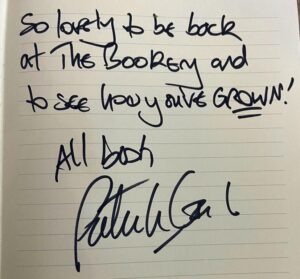 In response to one question, Patrick described his writing process, revealing that he still writes every manuscript longhand in notebooks. Passing one around the room drew audible admiration. As a final tease, he shared that his next book will be titled The Gardener’s Year — no pages written yet, patience required — though we made our hopes clear for his return.
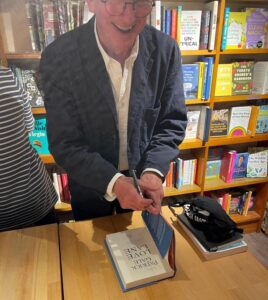
The evening ended with a relaxed signing and a room buzzing with conversation, that particular satisfaction that follows an evening of uplifting storytelling.
Signed copies of Love Lane are available in store or online HERE
April 23, 2026
Blog > Features > Coming Home on Love Lane: An Evening with Patrick Gale